
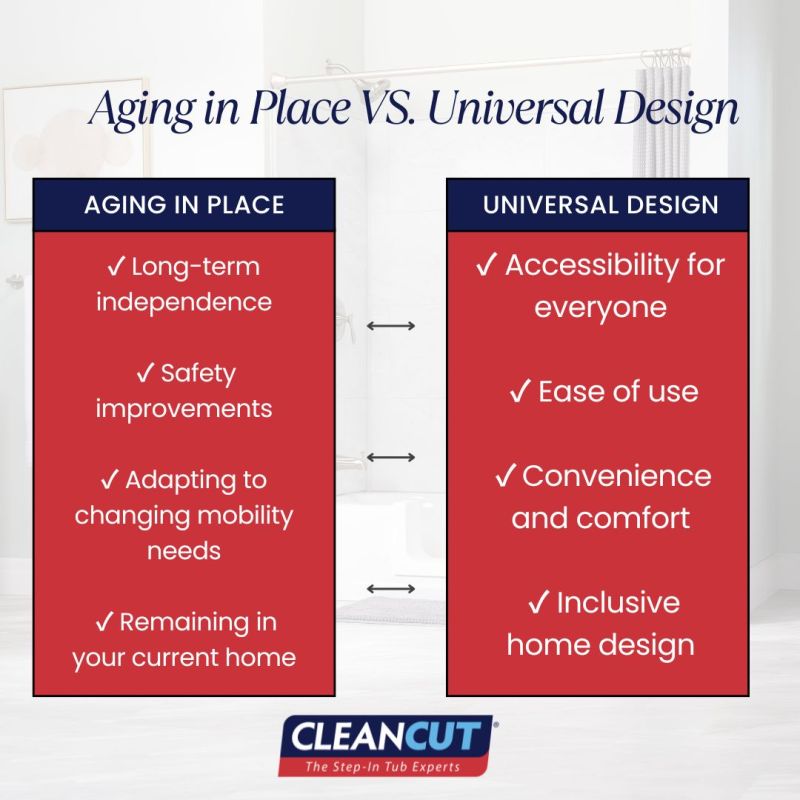
Aging in place and universal design are often discussed together, especially when homeowners begin thinking about making their homes safer and easier to navigate. While the two concepts overlap, they are not the same. Understanding the difference can help homeowners, families, caregivers, and housing professionals make better decisions about accessibility improvements.
What Is Aging in Place?
Aging in place refers to a person’s ability to remain safely, comfortably, and independently in their own home as they grow older.
Rather than waiting until mobility becomes a significant concern, many homeowners make gradual changes that can make everyday activities easier and reduce potential barriers throughout the home.
In the bathroom, those changes might include:
- Reducing the height needed to step over into a bathtub or shower
- Improved lighting
- Strategically placed grab bars
- Non-slip surfaces
- Accessible shower controls
- Seating
What Is Universal Design?
Universal design takes a broader approach. Instead of modifying a home specifically for an older adult or someone with limited mobility, universal design aims to create spaces that are easier and more convenient for as many people as possible—regardless of age or ability.
A well-designed bathroom, for example, can work for an older homeowner, a person recovering from surgery, someone with a temporary injury, a child, or a visiting family member with mobility limitations.
How Aging in Place and Universal Design Work Together
This is where the two concepts overlap.
| Aging in Place | Universal Design | |
| Focus | Supports one person’s changing needs | Works well for everyone in the home |
| Example | Grab bars for a specific homeowner | A step-free shower usable by all ages |
| Goal | Independence at home, long-term | Broad Accessibility, no retrofit needed |
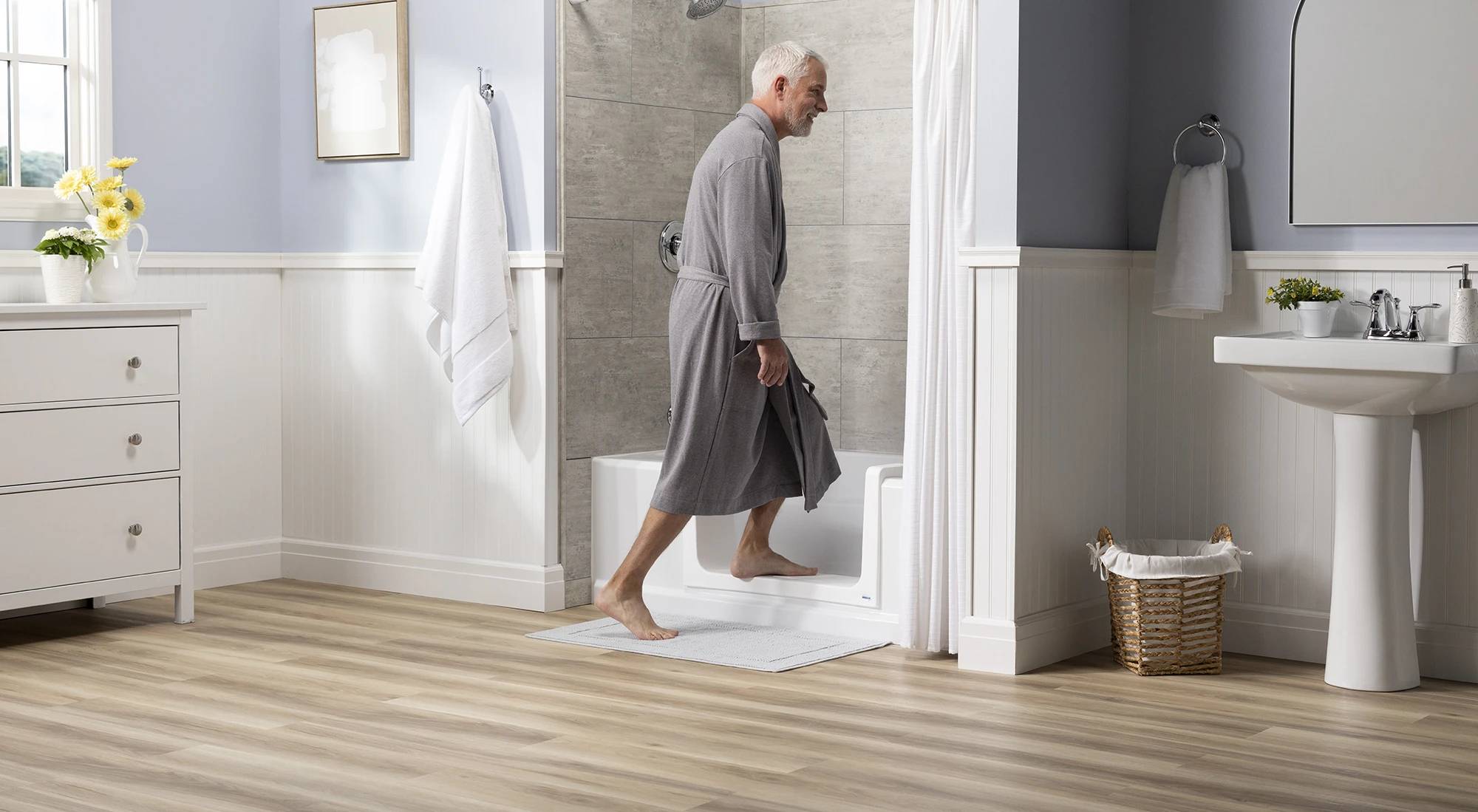
A bathroom improvement made to support aging in place can also follow universal design principles. Reducing the height of a bathtub wall, for example, can make entering and exiting the bathing area easier for an older adult while also making the bathroom more convenient for other members of the household.
The goal isn’t necessarily to make a home look “accessible.” It’s to remove unnecessary barriers and make everyday spaces easier to use.
Why the Bathroom Is Often a Priority
Bathrooms present a particular challenge because they combine:
- Water and hard surfaces
- Confined spaces
- Frequent transitional movements – stepping, turning, sitting, standing
For homeowners planning to remain in their homes long term, improving bathroom accessibility can therefore be an important part of preparing the home for changing needs.
And those improvements don’t always require replacing the bathtub or undertaking a complete bathroom renovation.
Improving Bathtub Accessibility Without a Full Remodel
CleanCut Bath accessibility products are designed to modify an existing bathtub by reducing the height of the tub wall that a person must step over.
Depending on the product selected, an existing bathtub can be converted to provide permanent step-through access or retain the ability to function as a full bathtub with the CleanCut Convertible®.
For homeowners considering aging in place or universal design improvements, this type of modification can provide a practical alternative to removing an existing bathtub and completing a larger renovation.
Planning for Today—and Tomorrow
Aging in place and universal design ultimately share an important principle: a home should work for the people who use it.
Homeowners don’t have to wait until accessibility becomes an immediate necessity to begin thinking about how their home may need to function in the future. Small, practical improvements made today can help create a bathroom that is safer, easier to use, and better prepared for changing needs.