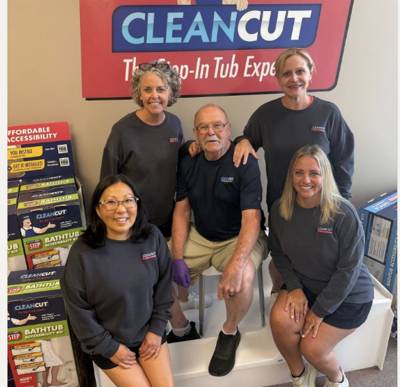
Quality and reliability start long before a product reaches your bathroom — they start with our dedicated warehouse team.
Our warehouse team manages a wide range of critical responsibilities, including receiving and shipping products, product assembly, and water testing every unit to ensure quality and leak-free performance before it leaves our facility.
Each day, this team processes hundreds of orders while supporting both our employee installers with inventory replenishment requests and our growing B2B segment with DIY kit orders. Their attention to detail, efficiency, and commitment to quality help ensure that our customers and partners receive the products they need, when they need them.
A sincere thank you to our warehouse team for the important role they play in delivering exceptional service and maintaining the high standards our customers have come to expect from CleanCut Bath.
Bathtub Cutout vs. Walk-In Tub: Which Is Right for You?
If you or a loved one is having trouble stepping over the wall of a standard bathtub, you’ve probably come across two very different solutions: a bathtub cutout (sometimes called a bathtub-to-shower conversion) and a walk-in tub. Both make bathing safer and more accessible — but they solve the problem in very different ways, at very different price points, and on very different timelines.
Here’s how they actually compare, so you can make the right call for your home, your budget, and your needs.
The Short Version
Bathtub Cutout
Walk-In Tub
Kit only
$380–$485 (varies by model)
—
Fully installed
$1,595 (Step, Deep Step, Ultra-Low) / $1,895 (Convertible)
$3,000–$10,000+
Installation time
Often same-day or 1–2 hours
Typically 1–3 days
Keeps your existing tub?
Yes — modifies what you have
No — full tub replacement
Plumbing changes required?
No
Often yes
Can you still take a bath?
Yes, if desired
Yes (that’s its main purpose)
Best for
Budget-conscious homeowners, renters, fast turnarounds
Homeowners wanting a dedicated soaking/therapy tub experience
What Is a Bathtub Cutout?
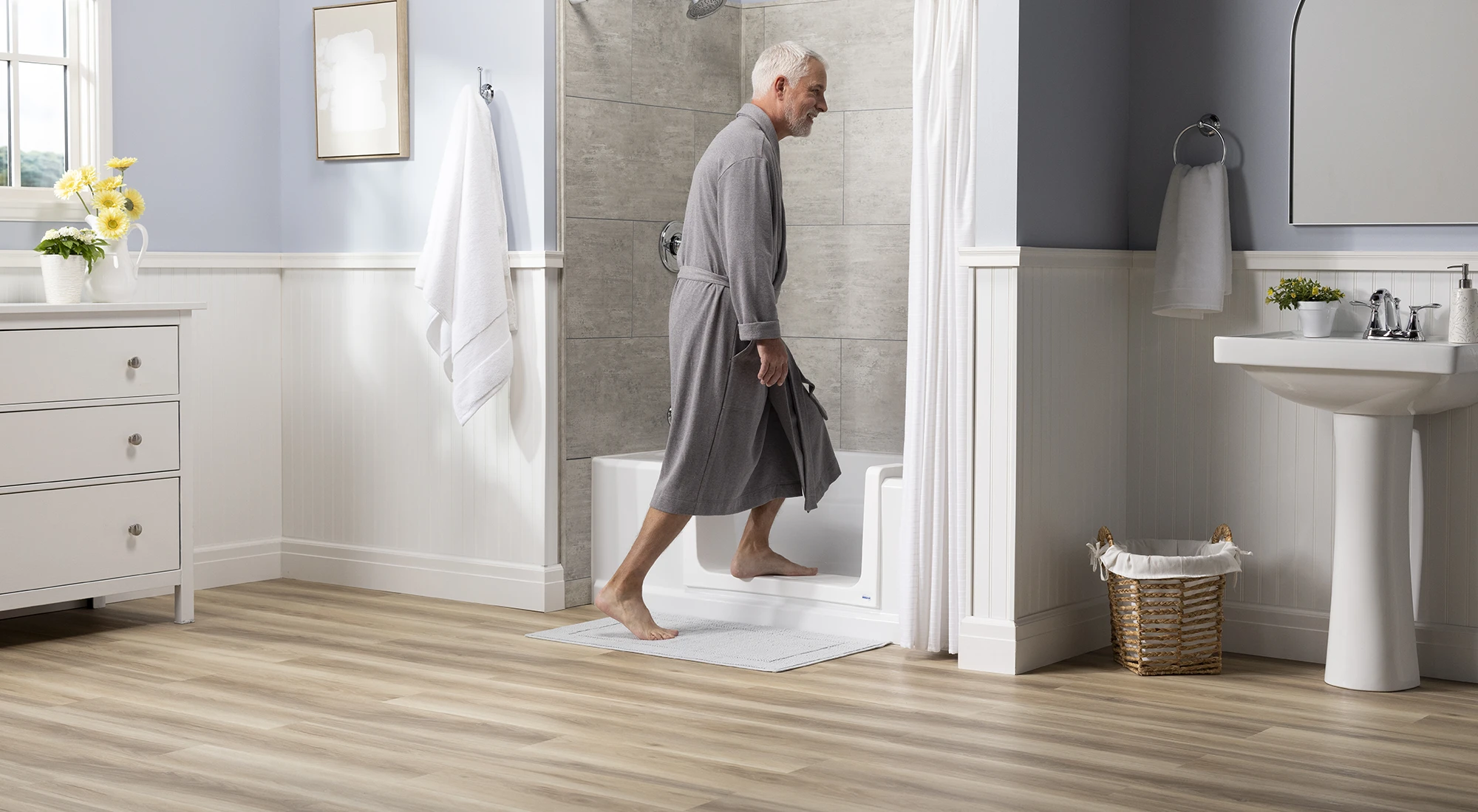
A bathtub cutout is exactly what it sounds like: a low-threshold entry point is cut directly into the wall of your existing bathtub, and a pre-fabricated kit is installed to create a clean, watertight, walk-through opening. Your tub stays where it is — you’re not ripping anything out, and in most cases you’re not touching any plumbing.
Because the tub itself isn’t replaced, a cutout is typically the faster, less invasive, and less expensive of the two options. It’s a modification, not a renovation.
What Is a Walk-In Tub?
A walk-in tub is an entirely new tub unit, purpose-built with a door in the side so you can step in without lifting your leg over a wall. Once you’re inside and the door is sealed, you fill the tub and bathe as normal — many models include jets, heated seats, or other spa-like features.
Because it’s a full tub replacement, installing a walk-in tub is a bigger project. It usually means removing the old tub, making plumbing adjustments to accommodate the new unit’s fill and drain requirements, and in some cases modifying surrounding tile or flooring.
Comparing the Two: What Actually Matters
1. Cost
This is usually the deciding factor. A bathtub cutout is a modification to what you already own, so you’re paying for the kit and a few hours of labor — not a new tub, not new plumbing, not new tile work. A walk-in tub is a full fixture replacement, and the price reflects that: the unit itself, removal and disposal of the old tub, plumbing work, and typically a multi-day install.
If budget is the primary concern, a bathtub cutout is almost always the more affordable path to a safer bathroom.
2. Installation Time and Disruption
A bathtub cutout can often be completed in a matter of hours, with minimal disruption to your bathroom or your routine. A walk-in tub installation is a construction project — expect your bathroom to be out of commission for a day or more, and expect some mess (cutting tile, disconnecting plumbing, etc.).
For anyone who needs a solution quickly, or who only has one bathroom in the home, that difference matters.
3. Keeping (or Losing) the Bathing Experience
Some people assume a cutout means giving up baths entirely — it doesn’t. With a properly installed cutout, you can still fill the tub and bathe if you choose to; the opening simply gives you a safer way in and out. A walk-in tub, on the other hand, is built around the bathing experience — you fill it after the door is sealed, and many models add features like hydrotherapy jets or built-in seating.
If a long soak or therapeutic jets are a priority, a walk-in tub may be worth the added investment. If your main goal is simply a safer way to get in and out, a cutout accomplishes that without changing how you bathe.
4. Resale and Renter Considerations
Because a bathtub cutout modifies your existing tub rather than replacing it, it’s generally viewed as a lower-impact change to a home — a relevant factor if you’re renting, in a senior living community, or thinking ahead to resale. A walk-in tub is a more permanent, visible change to the bathroom, which some buyers value and others may see as needing to be reversed.
5. Plumbing and Compatibility
Bathtub cutouts typically work with your tub’s existing plumbing — no relocation of the drain or supply lines required. Walk-in tubs often require plumbing adjustments to meet the new tub’s fill rate and drain specifications, which can add both cost and time, especially in older homes.
Which One Should You Choose?
A bathtub cutout is likely the better fit if you:
Want a safer bathroom without a major renovation
Are working with a tighter budget
Need the work done quickly
Are renting, or don’t want to permanently alter the bathroom
Still want the option to take a bath, but mainly need easier access
A walk-in tub is likely the better fit if you:
Want a dedicated therapeutic bathing experience (jets, heated seating, etc.)
Are already planning a fuller bathroom renovation
Have the budget and timeline for a multi-day installation
Are not concerned about permanently replacing the existing tub
The Bottom Line
Both options solve the same core problem — making it easier and safer to get in and out of the tub — but they get there in very different ways. A bathtub cutout is a fast, affordable modification that works with what you already have. A walk-in tub is a full replacement built around a dedicated bathing experience, at a higher cost and with a longer installation.
If you’re not sure which makes sense for your bathroom, our team can walk you through your specific setup, budget, and goals — no pressure, just honest guidance.
Ready to move forward? If you’re planning a DIY installation, start with our How To Size & Install guide to make sure you order the right kit. If you’d like professional installation, Get It Installed to find help near you.
What’s the Difference Between Aging in Place and Universal Design?
Aging in place and universal design are often discussed together, especially when homeowners begin thinking about making their homes safer and easier to navigate. While the two concepts overlap, they are not the same. Understanding the difference can help homeowners, families, caregivers, and housing professionals make better decisions about accessibility improvements.
What Is Aging in Place?
Aging in place refers to a person’s ability to remain safely, comfortably, and independently in their own home as they grow older.
Rather than waiting until mobility becomes a significant concern, many homeowners make gradual changes that can make everyday activities easier and reduce potential barriers throughout the home.
In the bathroom, those changes might include:
Reducing the height needed to step over into a bathtub or shower
Improved lighting
Strategically placed grab bars
Non-slip surfaces
Accessible shower controls
Seating
What Is Universal Design?
Universal design takes a broader approach. Instead of modifying a home specifically for an older adult or someone with limited mobility, universal design aims to create spaces that are easier and more convenient for as many people as possible—regardless of age or ability.
A well-designed bathroom, for example, can work for an older homeowner, a person recovering from surgery, someone with a temporary injury, a child, or a visiting family member with mobility limitations.
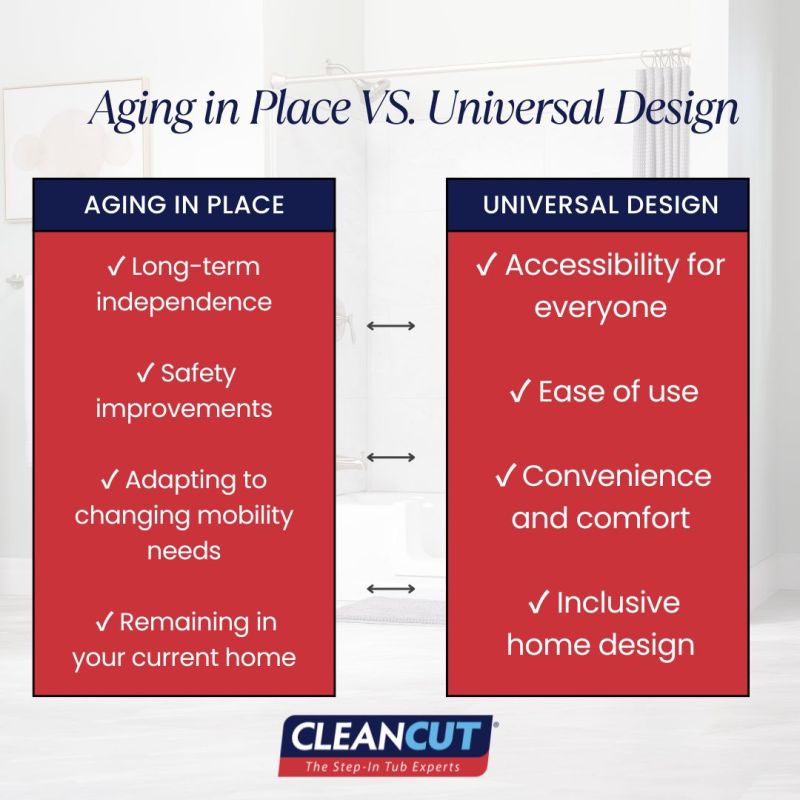
How Aging in Place and Universal Design Work Together
This is where the two concepts overlap.
Aging in Place
Universal Design
Focus
Supports one person’s changing needs
Works well for everyone in the home
Example
Grab bars for a specific homeowner
A step-free shower usable by all ages
Goal
Independence at home, long-term
Broad Accessibility, no retrofit needed
A bathroom improvement made to support aging in place can also follow universal design principles. Reducing the height of a bathtub wall, for example, can make entering and exiting the bathing area easier for an older adult while also making the bathroom more convenient for other members of the household.
The goal isn’t necessarily to make a home look “accessible.” It’s to remove unnecessary barriers and make everyday spaces easier to use.
Why the Bathroom Is Often a Priority
Bathrooms present a particular challenge because they combine:
For homeowners planning to remain in their homes long term, improving bathroom accessibility can therefore be an important part of preparing the home for changing needs.
And those improvements don’t always require replacing the bathtub or undertaking a complete bathroom renovation.
Improving Bathtub Accessibility Without a Full Remodel
CleanCut Bath accessibility products are designed to modify an existing bathtub by reducing the height of the tub wall that a person must step over.
Depending on the product selected, an existing bathtub can be converted to provide permanent step-through access or retain the ability to function as a full bathtub with the CleanCut Convertible®.
For homeowners considering aging in place or universal design improvements, this type of modification can provide a practical alternative to removing an existing bathtub and completing a larger renovation.
Planning for Today—and Tomorrow
Aging in place and universal design ultimately share an important principle: a home should work for the people who use it.
Homeowners don’t have to wait until accessibility becomes an immediate necessity to begin thinking about how their home may need to function in the future. Small, practical improvements made today can help create a bathroom that is safer, easier to use, and better prepared for changing needs.
Celebrating 25 Years of Helping Families Stay Safe at Home
CINCINNATI, Ohio — This year, CleanCut proudly celebrates 25 years of helping families create safer, more accessible bathrooms without the expense and disruption of a complete remodel. What began with one firefighter’s vision has grown into a trusted family business that has helped hundreds of thousands of homeowners maintain their independence and remain safely in the homes they love.
A Legacy Built on Innovation and Family Values
Founded in 2001 by Don Stafford, CleanCut Bath is a third-generation family business dedicated to making homes safer through innovative bathtub accessibility solutions. For 25 years, the company has designed, manufactured, distributed, and installed products that help people maintain their independence without the expense and disruption of a complete bathroom remodel. Today, more than 200,000 CleanCut products have been installed in private homes, assisted and senior living communities, hospitality properties, and state and local assistance programs across the United States.
Celebrating 25 years is also an opportunity to recognize the customers, employees, installation partners, dealers, and communities who have supported CleanCut throughout its journey. Their trust and loyalty have helped the company grow from a family-owned startup into a recognized leader in bathtub accessibility.
As CleanCut looks to the future, the company remains committed to the same values that inspired its founding: innovation, quality craftsmanship, and helping families stay safe at home.